

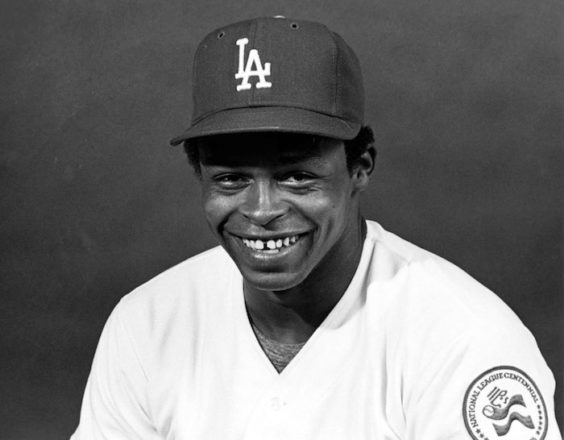
Photo Credit L.A. Dodgers
By Sarah Calise
One of my first gay crushes was a girl named Samantha on my Little League baseball team. I did not know what the word “gay” meant, but I knew I loved her laugh, the way her dark curly hair fell out from her baseball cap, and how our hands touched and electrified during a high five. About fifteen years later, I learned that a Dodgers player, Glenn Burke, invented the high five in 1977. Since I grew up among avid baseball fans and had a love for the game’s history, it was weird I did not know Burke’s name. Then I learned that Burke was gay and died of AIDS in 1995. His obscurity suddenly made sense. Andrew Maraniss, a Nashville-based author, is now shedding some much-needed light on this pioneer in sports.
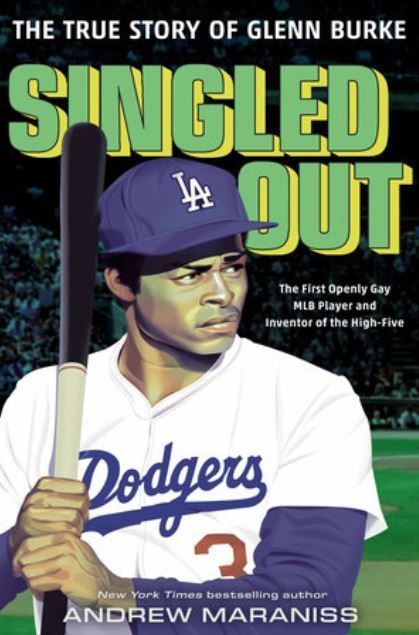
In Singled Out (2021), Maraniss gives an enthralling biography of Burke among the backdrop of the gay rights movement in the 1970s. Burke was born on November 16, 1952 in Oakland, California to a strong mother, Alice, and an abusive father, Luther. He also had four older, protective sisters: Beverly, Lutha, Joyce, and Elona. He found his talent for baseball and basketball at Bushrod Park, spending long hours in sweaty uniforms. He graduated from Berkeley High School in 1970 with a legion of admirers, not only for his athletic prowess but his humor and charisma, too. Maraniss writes that Burke was “the teen idol every other boy aspired to be.”
His popularity translated to professional baseball, too—at least for a little while. He signed a contract with the Dodgers in June 1972. Burke’s Minor League teammates noticed his lack of interest in women, and he struggled with knowing he was different. This underlying tension sometimes burst forth and caused fights with teammates. But ultimately they respected him for his toughness and incredible baseball abilities. They easily ignored Burke’s oddities. Besides, a pro athlete couldn’t possibly be gay, right?
Maraniss points to a groundbreaking essay series published in the “Washington Star” in 1975 that examined “Homosexuals in Sports.” Reporter Lynn Rosellini noted that homosexuality remained a “fearsome, hateful aberration” in the professional sporting world, and she quoted a homophobic rant from Minnesota Twins public relations director Tom Mee as evidence. In the late 1970s, gay rights activists and allies clashed with the rise of the Religious Right and conservative public figures like Anita Bryant. It was within this environment that Burke rose to the ranks of professional baseball.
He made his Major League debut in San Francisco on April 9, 1976. It could not have been a more apt city for Burke to launch a career. The Bay Area was his home in more ways than one. His family lived there, he built his athletic talent there, and, during the winter, it is where he explored his sexuality and enjoyed rich, gay community before going back into the closet for baseball season. But his double life was falling apart by the end of 1977.
Burke’s sexuality became an open secret. Maraniss’ book describes a change in the Dodgers locker room. Some players started wearing towels more often and cracked homophobic jokes at Burke’s expense. Despite being critical to a World Series run and named Dodgers’ Rookie of the Year, the team got rid of Burke in 1978. Many of his Dodgers teammates cried at his departure. The managers shed no tears. They traded him to Oakland because he was gay. Burke got more playing time in Oakland, but he was on a team that suffered in the wins column and increasingly objected to his sexuality. Burke quit baseball on June 4, 1979.
Finally able to live as himself, Burke never found any financial footing again. He stayed in sports any way he could, winning medals at the first Gay Games in 1982. He also publicly came out that year on The Today Show. The confession did not make waves but instead went largely ignored. In 1987, Burke broke his legs in a freak car accident which buried any future athletic dreams. He went on to experience homelessness and drug addiction, and eventually, contracted HIV. In 1994, he was dying. Burke’s friend Jack McGowan called Sandy Alderson, the general manager of the Oakland A’s. He told him that “baseball should be ashamed of itself.” To Burke’s shock, Alderson found him some help and he was able to live out his final days in peace. He died on May 30, 1995.
“I think MLB and the teams Glenn played for have really dropped the ball on recognizing Glenn’s place in history and using his story as a springboard for greater support for LGBTQIA+ players and fans,” wrote Maraniss in a recent email exchange. “It’s clear these teams and MLB are embarrassed by how Glenn was treated and have not figured out a way to deal with that uncomfortable truth in a productive way.”
Glenn Burke was never a burden to his teammates or his family. Society’s homophobia wants gay people to feel that way—Burke certainly did. But it is baseball’s homophobia that is the real burden; it is the closed minds and bigotry that make the supposed national pastime difficult for marginalized people to enjoy. Major League Baseball and the National Baseball Hall of Fame must do more to recognize Burke’s historic contributions and courage, and they need to enact greater support and resources for any current players, coaches, or management that identify as part of the LGBTQ+ community. Professional sports continue to slide by on performative allyship and meaningless gestures. Real change takes greater action and a lifelong commitment to inclusion at every level of the game. Burke’s friend Jack McGowan was right back in 1994. Baseball should be ashamed of itself.
 Lesbian Visibility Week North America Returns for Third Year – The Lipstick Lounge Hosting Queereoke April 23
  ‘I Wish You All the Best’ Brings Tender Non-Binary Story to Digital November 25
  Madeline Finn to Headline The East Room with Ryan Cassata & Lauren Horbal
  Ty Herndon, Ashley McBryde Join Forces For Powerful Reimagining of ‘A Man Holdin’ On (To A Woman Lettin’ Go)’
  From AGT to Billboard: Wyn Starks drops ‘Dance All Night’
 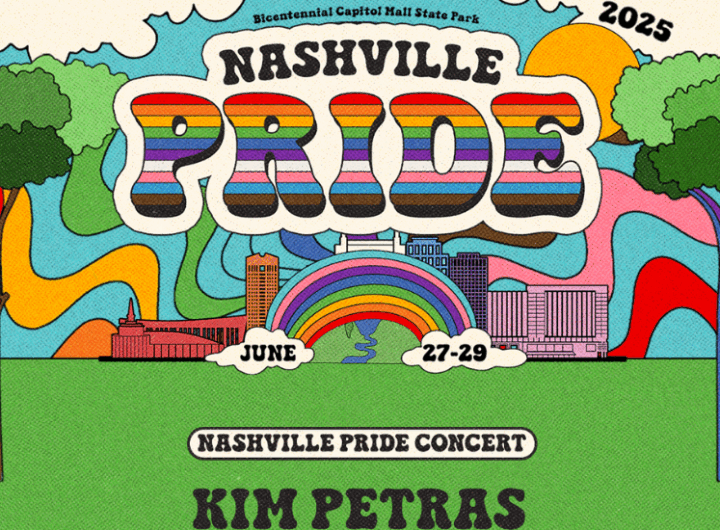 Nashville Pride Unveils 2025 Festival Lineup: Kim Petras, 4 Non Blondes, Big Freedia & More